Compare the same type of rating across bags. A limit figure is not the same information as a comfort figure, and neither guarantees how warm you will feel in your own sleep system.
Start with the label, not the product name
A sleeping bag called ‘20’ might invite a quick comparison with another bag carrying the same number. Pause until you know the units, rating type and test information. REI explains that ISO or EN labels distinguish comfort from limit, using reference sleepers under defined test conditions. The name printed on a shop card is not enough to identify which value you are seeing. Write down the comfort value, limit value and units separately when they are available.
Comfort and limit answer different questions
In the rating system described by REI, comfort refers to the temperature at which a reference cold sleeper might remain comfortable; limit refers to a reference warm sleeper. These are test classifications, not rules assigning every woman or man to one group. If you normally sleep cold, do not select a bag simply because its lower limit matches your expected night. REI’s backpacking-bag guide likewise separates warm and cold sleepers when discussing rating choices. This guide does not provide advice for emergency exposure.
Compare like with like in a small shortlist
Consider an invented example in degrees Celsius: bag A has comfort 5 and limit 0; bag B has comfort 0 and limit minus 5. If a shop headline advertises ‘0’ for each, the bags may appear equivalent, yet one could be using the limit and the other the comfort number. This example describes no real product. It shows why your comparison should use a single column and why missing values should stay marked ‘not stated’ until the manufacturer explains them.
Keep the sleeping pad in the decision
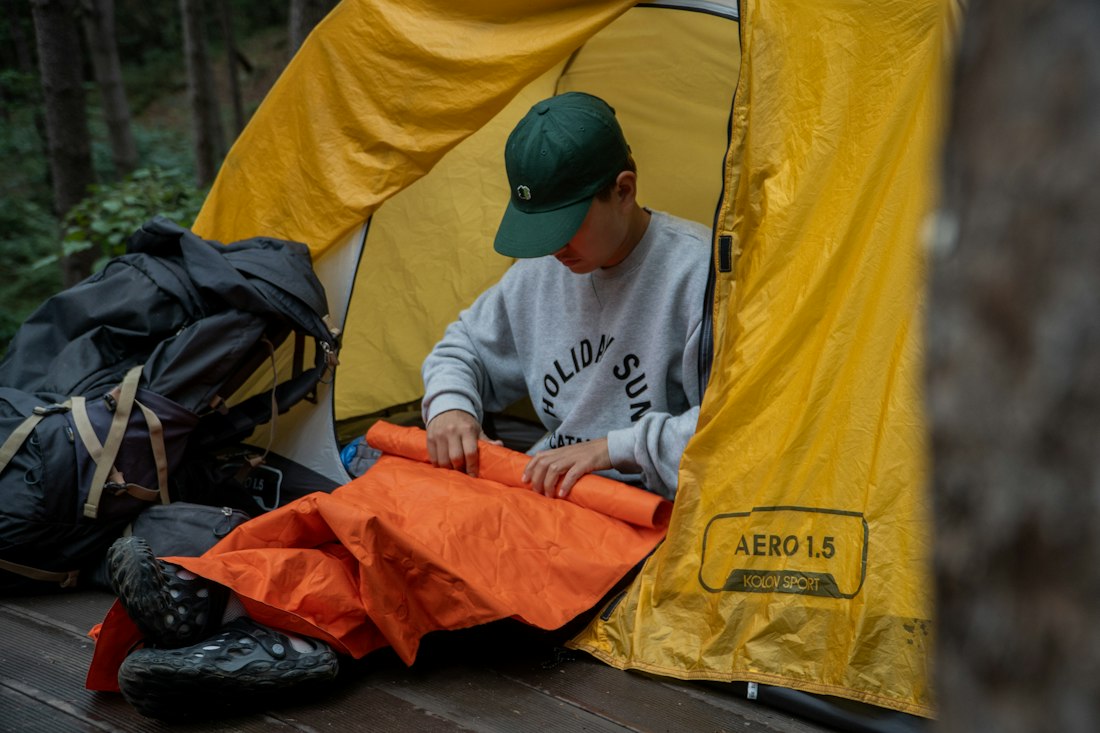
REI notes that sleeping-pad insulation affects how a bag performs and that temperature testing uses specified equipment. Your bag is one component of a sleep system. A thick-looking air pad does not automatically tell you its insulation: look for its stated R-value and the maker’s guidance for the conditions. Our existing sleeping-pad guide explains that separate buying question. Do not try to calculate a guaranteed personal comfort temperature by adding a pad number to a bag rating; the two scales measure different things.
Check fit and ordinary camping conditions
Compare the bag’s stated fit with your height and preferred sleeping position, and try the fastening when possible. A label cannot tell you whether you can turn comfortably, keep insulation positioned as intended or tolerate the hood. Also consider the forecast range, moisture management and what clothing the maker assumes. Treat a possible colder night as a reason to revisit the plan and equipment with competent local advice. This is an ordinary gear comparison, not a formula for pushing a bag into hazardous conditions.
Ask the manufacturer a precise question
If a listing is unclear, ask: ‘For this exact size and version, is the advertised number ISO/EN comfort, limit or your own rating, and where can I see the full label?’ Add the sleeping pad you intend to use and your normal sleeping experience. A clear reply lets you compare documented specifications; a vague season label does not fill the gap. If two products use different test systems or no stated system, acknowledge the uncertainty rather than awarding one a precise numerical advantage.
Choose the complete setup
Keep one note containing the bag reference, rating type, units, pad information and fit observations. A shop fitting or a mild-condition familiar trial may reveal comfort issues before a trip, but is not proof of performance in harsher weather. For storage and preparation, follow each maker’s instructions and inspect the equipment before packing. Purchase decisions are strongest when the rating label supports a realistic plan, rather than being treated as a target to reach.
A check before you decide
| Listing detail | What it tells you | What it cannot settle |
|---|---|---|
| Comfort rating | Reference cold-sleeper test value | Your personal guaranteed comfort |
| Limit rating | Different reference-sleeper test value | Equivalence to another bag’s comfort value |
| Pad R-value | Separate measure of pad insulation | A number to add directly to bag degrees |
Sources and approach
- REI — Understanding sleeping bag temperature ratings
- REI — How to choose sleeping bags for backpacking
Sources checked 18 November 2026. This is general, researched information. We have not carried out a hands-on test of the products shown. Read the specific manufacturer’s instructions and current local guidance. Our editorial policy.